Artificial intelligence is rapidly transforming the global healthcare landscape, marking the beginning of a new era defined by predictive intelligence, personalized care, and continuous patient engagement. This transformation, increasingly referred to as Healthcare 3.0, represents a fundamental shift in how healthcare systems operate, deliver value, and interact with patients.
At its core, Healthcare 3.0 is driven by the convergence of advanced technologies, including genomics, data analytics, and integrated digital health platforms. These innovations are enabling healthcare providers to move beyond traditional reactive models toward a more proactive and individualized approach to care. Instead of responding to illness after it occurs, clinicians are now better equipped to anticipate risks, detect conditions earlier, and tailor treatments based on each patient’s unique biological profile.
One of the most significant enablers of this transformation is the growing role of diagnostics and laboratory intelligence. Laboratories are no longer confined to processing tests and generating reports. They are becoming central to clinical decision making, providing the structured and high quality data needed to power artificial intelligence systems and predictive models.
Artificial intelligence plays a critical role in interpreting complex datasets that would otherwise be impossible to analyze at scale. By identifying patterns across genomic data, medical histories, and real time health indicators, AI is enabling a deeper understanding of patient health and disease progression. This allows healthcare providers to deliver more precise and effective interventions.
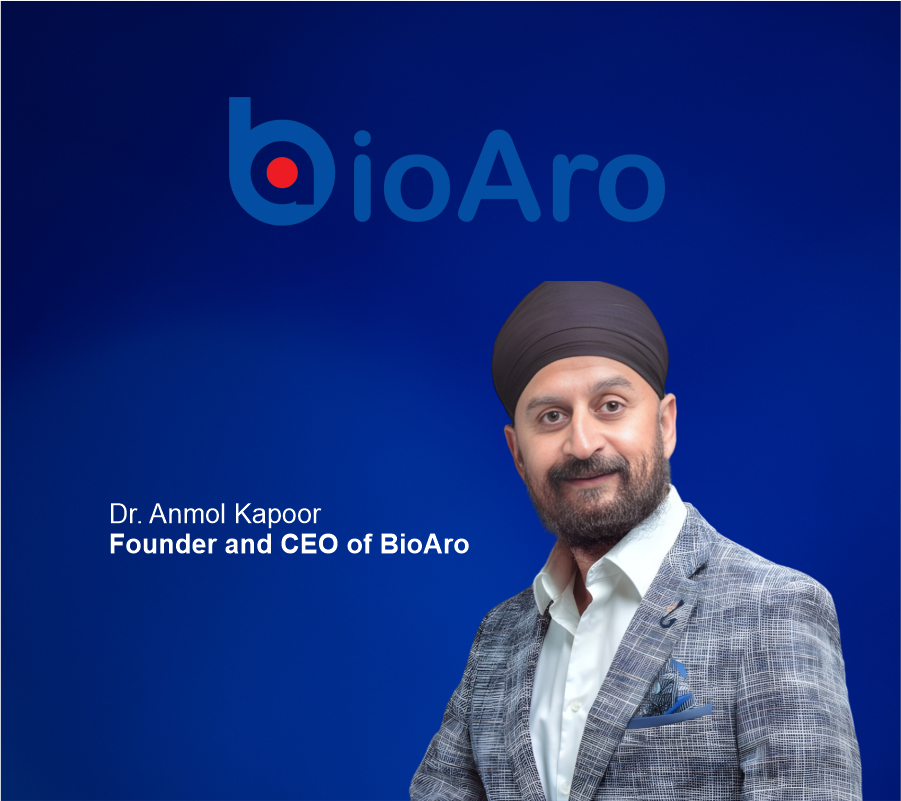
Dr Anmol Kapoor, Founder and Chief Executive Officer of BioAro, highlighted the importance of this shift:
“Healthcare 3.0 is more patient centric and more personalised to you to your DNA, your microbiome and your epigenetics. AI is critical because it enables pattern recognition and clinical interpretation across complex datasets, allowing care to be tailored to each individual patient.”
The evolution toward Healthcare 3.0 reflects a broader progression in the industry. Earlier models of healthcare relied heavily on limited diagnostic capabilities and episodic care. The introduction of digital records and imaging technologies improved access to information but still operated within largely reactive frameworks. Today, the integration of artificial intelligence and continuous data streams is enabling a more dynamic and responsive healthcare system.
This new model emphasizes continuous insight rather than isolated interactions. Patients are no longer defined by occasional visits to healthcare providers. Instead, their health can be monitored and understood over time, creating opportunities for early intervention and more effective disease management.
The implications of this shift extend beyond clinical care. Healthcare systems are being restructured to prioritize efficiency, accuracy, and long term outcomes. Early detection reduces the burden of advanced disease. Faster and more informed decision making improves treatment effectiveness. Personalized care enhances patient satisfaction and overall health outcomes.
At the same time, this transformation raises important considerations around data integration, governance, and system readiness. The successful adoption of Healthcare 3.0 will depend on the ability of healthcare systems to manage large volumes of data securely, ensure interoperability across platforms, and train professionals to work within increasingly technology driven environments.
Despite these challenges, the direction of the industry is clear. Artificial intelligence is not simply an enhancement to existing healthcare models. It is redefining the foundation of how care is delivered.
As healthcare systems continue to evolve, Healthcare 3.0 is expected to become the standard rather than the exception. The combination of advanced diagnostics, intelligent data systems, and personalized care pathways is setting a new benchmark for what modern healthcare can achieve.
The future of healthcare will be shaped not only by how diseases are treated, but by how effectively they are predicted, prevented, and managed. In this new era, artificial intelligence stands at the center of that transformation.