
By American Chamber of Health Editorial Team
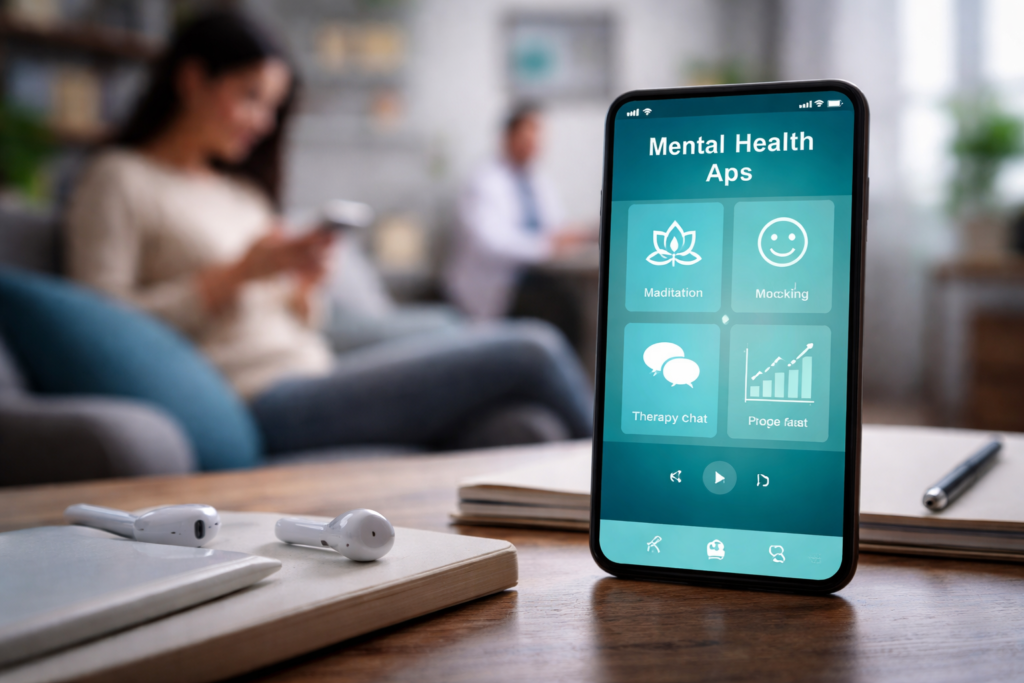
When Sarah downloaded a meditation app during a sleepless stretch of anxiety, she was not thinking about federal regulation or data privacy. She simply wanted relief.
Within minutes, she had access to breathing exercises, mood trackers and daily affirmations. These tools felt, at least temporarily, like therapy in her pocket. What she did not realize was that the app collecting her most sensitive thoughts might not be subject to the same privacy protections as her doctor.
Across the United States, millions of individuals are turning to digital mental health applications as a first point of support. These platforms promise convenience, affordability and immediate access in a healthcare system where therapy appointments can take weeks or even months to secure. As their popularity grows, so do questions about their effectiveness, regulatory oversight and data practices.
A System Under Strain
The rise of mental health applications reflects deeper structural challenges within the United States healthcare system.
Nearly one in five adults experiences a mental health condition each year, yet access to care remains uneven. Workforce shortages, high costs and geographic disparities continue to limit timely treatment.
Digital platforms have emerged as a response to these gaps. They provide immediate access to tools that support mindfulness, symptom tracking and behavioral interventions.
A clinical psychologist familiar with digital therapeutics noted that these tools are filling a critical gap in access. However, filling a gap does not equate to replacing comprehensive care.
The global market for mental health applications, valued at approximately 7.5 billion dollars in 2024, is projected to grow substantially over the next decade. North America accounts for a significant share of this expansion, driven by high smartphone penetration and increasing awareness of mental health.
Employers are also contributing to adoption by offering app based wellness programs to address burnout and improve productivity. For many users, these applications serve as an accessible and immediate form of support.
Therapy or Something Else
Many mental health applications incorporate elements of evidence based practices such as cognitive behavioral therapy. Some have demonstrated effectiveness in reducing symptoms of anxiety and depression, particularly for individuals with mild to moderate conditions.
However, the overall evidence base remains inconsistent.
Estimates suggest that only a small proportion of mental health applications have undergone rigorous clinical validation. Long term studies are limited, and many evaluations are conducted by the companies that develop the products.
A digital health researcher explained that consumers often assume that high ratings and widespread availability indicate effectiveness. This assumption can be misleading.
Unlike traditional medical treatments, most mental health applications are not required to demonstrate clinical efficacy before entering the market.
A Patchwork of Oversight
Regulation of digital mental health applications in the United States remains fragmented.
The U.S. Food and Drug Administration oversees digital products that are classified as medical devices, particularly those that claim to diagnose or treat specific conditions. However, many applications position themselves as general wellness tools, allowing them to operate without undergoing formal regulatory review.
This distinction creates a gap between consumer expectations and regulatory standards.
A health policy expert noted that this environment makes it difficult for users to distinguish between clinically validated tools and general wellness products.
During the COVID 19 pandemic, policy changes expanded access to telehealth services, supported by the Centers for Medicare & Medicaid Services. While these measures accelerated the adoption of digital health solutions, they did not establish consistent frameworks for evaluating or reimbursing mental health applications.
The Hidden Cost of Data
Beyond questions of effectiveness and regulation, data privacy remains a central concern.
Mental health applications often collect highly sensitive information, including mood logs, personal reflections and behavioral data. Many of these platforms operate outside the scope of traditional healthcare privacy protections.
As a result, user data may be shared with third parties for advertising or analytics purposes.
The Federal Trade Commission has taken enforcement action against companies for misleading users about their data practices. These cases highlight the risks associated with insufficient transparency and oversight.
A privacy advocate emphasized that individuals are sharing deeply personal information and should have clear visibility into how that data is used and protected.
A Tool Within a Broader System
Despite these concerns, many healthcare professionals recognize the potential value of digital mental health tools.
Applications can support users in tracking symptoms, building healthy habits and maintaining engagement between clinical visits. Some healthcare systems are exploring hybrid care models that integrate digital tools with clinician oversight.
A psychiatrist noted that while these applications can be beneficial, they are not a substitute for professional diagnosis, therapy or crisis intervention.
Their effectiveness is most evident when used as part of a broader, coordinated approach to mental healthcare.
Looking Ahead
As digital mental health applications continue to expand, there is growing consensus on the need for clearer standards and stronger safeguards.
Policymakers, researchers and industry stakeholders are calling for improved clinical validation, transparent data practices and more defined regulatory pathways. Without these measures, the market risks becoming a mix of high quality tools and unverified products that are difficult for consumers to distinguish.
For now, individuals must navigate this landscape with limited guidance.
Sarah continues to use her meditation app. It helps her manage stress at the end of long days, even as questions remain about its oversight and data practices.
She does not view it as a replacement for therapy, but in moments when traditional care is not accessible, it provides a form of support.
In a healthcare system still working to meet demand, that accessibility is both the promise and the challenge of digital mental health.